Theory of change
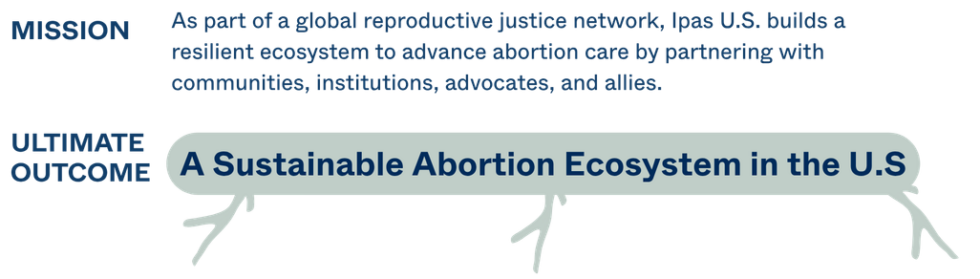
Our Theory of Change is rooted in the Ipas network's TOC and is designed to drive change in the U.S. context while remaining fully aligned with our global vision, mission, and outcomes.
Law & Policy
Outcome 1
Short term: Enhance political will and strengthened partner-led leadership
Long term: Policies increasingly protect and expand abortion access
Education, Support & Community Leadership
Outcome 2
Short Term: Improved knowledge, capacity, and support among local networks and community partners
Long Term: Enhanced agency and community-supported social norms.
Access & Care Pathways
Outcome 3
Short Term: Strengthened and coordinated institutional and community-based pathways
Long Term: Improved access, availability, quality & acceptability of abortion care
Community-Driven Knowledge & Evidence
Cross-cutting outcome 1
Movement Bridging
Cross-cutting outcome 2
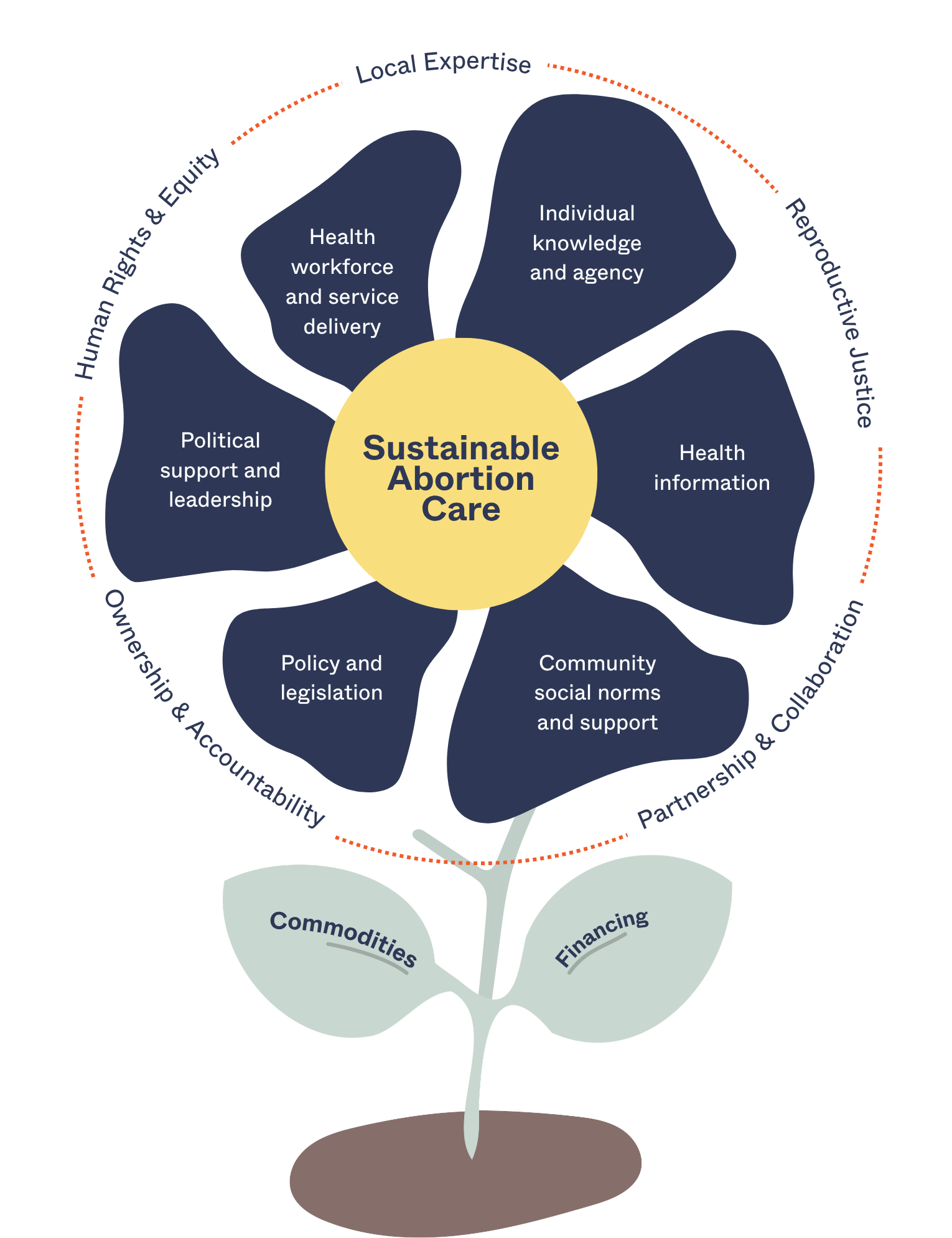
Drivers of the abortion ecosystem
Human Rights & Equity, Local Expertise, Reproductive Justice, Partnership & Collaboration, Ownership & Accountability
Sustainable Abortion Ecosystem
We recognize that access to abortion is shaped by multiple, interconnected factors that influence an individual’s ability to access abortion.
The U.S. reproductive health, rights, and justice ecosystem is made up of many essential and interdependent actors, including abortion funds, clinics and providers, doulas and accompaniment networks, organizers, researchers, and legal advocates, each advancing access to abortion care in distinct and interdependent ways.
Within this ecosystem, Ipas U.S. sits alongside and in service of these efforts, playing a bridge-building and ecosystem-strengthening role. Ipas U.S. focuses on strengthening the conditions that make abortion access possible, resilient, and sustainable, especially in hostile and highly restrictive environments.